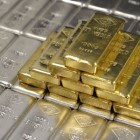
“Alternative assets” is the broader name for the suite of investment opportunities afforded by self-directed IRAs (SDIRAs). These alternative assets include real estate, precious metals, private equity and more. Alternative assets could even be oil rigs, tractors or trees. According the IRS, alternative assets can be anything except collectibles (wine, stamps, etc.) or life insurance.
The flexibility afforded by alternative assets and SDIRAs allow the IRA holder to choose what types of assets his IRA invests in. People with self-directed IRAs can rely on their own investment expertise, making tax-free or tax-deferred investments in assets they know and understand personally.
Alternative assets can be held in Traditional and Roth IRAs, SEP and SIMPLE IRAs, even Individual 401ks—as long as those accounts are serviced by a SDIRA provider. The truth is any IRA can be self-directed; it’s just that many IRA holders choose an IRA provider that restricts the types of investments it can make.
This new pool of alternative asset opportunities attracts many investors to SDIRAs. For instance, a self-directed IRA with investments in real estate can charge rent to tenants or visitors, let land appreciate in value, rent commercial space to business, fix and flip property and much more (plus, the property can be distributed for personal use after reaching retirement age.) This increases the value of the IRA as all income and payments must only be made to and from the IRA, not the account holder.
This ability to increase the value of your IRA with alternative assets continues to grow in popularity due to market volatility, favorable legislation, tax advantages, disaffection with banks and securities-based IRA and 401(k) providers, and the ability to invest in what you know.
According to IRS rules, investors need a self-directed IRA provider, like New Direction IRA, to handle the bookkeeping and administration for the account. Visit www.newdirectionira.com to get started.
Showing posts with label precious metals. Show all posts
Tuesday, March 11, 2014
Wednesday, July 10, 2013
Gold IRA How-to: Who are the parties I need to work with to invest my IRA in gold?
Most
people don't know that their Individual Retirement Account can be legally
invested in almost any type of asset except collectibles and life
insurance. That means you can invest
your retirement funds in precious metals like gold, silver, platinum and palladium—and
it's a relatively easy process.
There
are four players involved when using your IRA to purchase precious metals: The IRS, a Self-Directed IRA Provider like
New Direction IRA, a Precious Metals Dealer and a Precious Metals Depository.
1. The IRS. In return for the
special tax status that retirement accounts receive, the IRS sets some
parameters that need to be followed.
First, your IRA is allowed to purchase metals as a commodity but cannot
purchase collectible coins. Therefore,
graded coins cannot be purchased.
However, the IRS does specifically allow U.S. minted American Eagles
that have not undergone grading.
Second,
there is requirement for the fineness or purity of the metals (note that these
requirements do not apply to American Eagle coins):
.995 for Gold
.999 for Silver
.9995 for Platinum and Palladium
Third,
your IRA cannot buy or sell your metals from a disqualified person.
Disqualified persons include you, your spouse, your ascendants, descendants and
their spouses.
2. Self-Directed
IRA Provider.
A self-directed IRA provider that allows assets like precious metals will help
make you aware of IRS requirements as well as perform record keeping for your
account. If your retirement funds are
not currently with an IRA provider that allows precious metal investing, you
will likely be able to move your funds without a tax penalty to a provider that
does allow precious metals. It is a good
idea to set up your self-directed IRA and fund it before negotiating your
purchase with a metals dealer. The prices of metals are volatile and brokers
are not likely to lock in a price for a long period of time.
3. Precious Metals
Dealer/Broker.
Self-direction of your retirement account means that you get to select a
precious metals dealer with whom you are comfortable. Due diligence is your responsibility, but
once you’re satisfied with your selection, you agree on the deal and direct the
IRA provider to fund your purchase.
4. Precious Metals
Depository.
The IRS restricts you from keeping your IRA-owned metals in your physical
possession. They must be held in a
depository for safe-keeping but the selection of this storage site is up to
you. Factors that you might consider
include fees, segregated vs. non-segregated storage, facility location and
insurance levels.
Now
that we’ve identified the four players involved and established some
expectations about their roles, it is time to start putting together your new
Precious Metals IRA. For more detailed
information, please visit www.newdirectionira.com or call us toll
free at (877) 742-1270.
Friday, July 5, 2013
Financial Planners: How to help your client's IRAs invest in gold and precious metals
Self-directed IRAs allow control of one’s retirement
investments. Clients can benefit from self-directed IRAs by reducing their
taxes while enhancing their asset protection and estate planning. With this
insight, your clients can unlock their own investment expertise, making
tax-free or tax-deferred investments in assets they may know and understand
personally.
Many financial professionals have
concerns about their clients holding precious metals in an IRA. Part of what we
do at New Direction is simplify and clarify the process so investors can make
smart decisions about their IRAs.
There are three parties an investor
needs to choose in order to hold a gold IRA: a self-directed IRA provider, a
precious metals dealer and a depository.
A self-directed IRA provider like New Direction IRA will set up an IRA for
your client that allows precious metals, provide education on IRS requirements
and perform record keeping for the account. Investors can move their funds
without a tax penalty to a provider that does allow precious metals if they
currently have an IRA.
With
a truly self-directed retirement account, your client can select a precious metals broker with whom they
are comfortable. Due diligence is your client’s responsibility. Dealer fees, shipping
and handling charges are also likely to be incurred.
Your
client must choose a depository in
which to store his metals. Clients should consider fees, segregated storage,
facility location and/or insurance levels. The depository will charge for their
storage services.
There
are also strict regulations about which metals an IRA may hold. IRAs may only
purchase gold, silver, platinum and palladium products approved by the IRS. You
can view the full list of allowed and disallowed metals here and share
that list with clients.
Financial
professionals also may be concerned about their clients self-dealing assets.
Indeed, an investor who’s IRA owns precious metals does not personally own the
metals and cannot physically handle those assets. New Direction provides
education to investors so that they know what constitutes self-dealing and how
to stay within IRS code.
After
our client decides to invest his IRA in precious metals, it’s simple to get
started. The investor will open and fund the account via contribution, transfer
or rollover. Then he’ll select his dealer and depository. Then, he’ll direct
the provider to fund the purchase and the metals will be sent to the chosen
depository.
Friday, June 28, 2013
How to Invest Your IRA in Gold and Precious Metals
A lot of people are surprised when they learn that IRA rules
allow them to hold real gold bullion, gold coins and other similar forms of
precious metals within their retirement accounts. But IRA rules give investors
a lot of leeway as to what they can hold in their accounts. IRAs are not
restricted to stocks, mutual funds, bonds, certificates of deposit, annuities
and other conventional financial products.
With a self-directed IRA account, you can hold precious
metals including gold, silver, platinum and other precious metals. Here are
some basic requirements:
Allowable
Investments
There are four precious metals in which your IRA can invest:
gold, silver, platinum and palladium. There are, however, some restrictions
when investing in these metals.
Minimum Fineness Required:
Gold .995+
Silver .999+
Platinum .9995+
Palladium .9995+
Allowable coins include U.S.-Minted Eagles and coins meeting
minimum fineness (purity) standards, provided that they are not collectible.
The primary value of the coin should come from the gold itself, and not thanks
to the scarcity of and demand for the minted coin among coin collectors.
Examples of coins you can own:
Gold
American Eagle coins (proof and non-proof)
American Gold Buffalo coins (non-proof)
Austrian Gold Philharmonics coins
Canadian Maple Leaf coins
Australian Kangaroo/Nugget coins
Bars and rounds by a refiner/assayer/manufacturer accredited
by NYMEX/COMEX, NYSE/Liffe, LME, LBMA, ISO 9000, or national government mint
and meeting minimum fineness requirements.
Silver
American Eagle Coins (proof and non-proof)
Austrian Philharmonic
Mexican Libtertads
Australian Kookaburras
Canadian Silver Maple Leaf Coins
Platinum
American Eagle Coins (proof and non-proof)
Australian Koalas
Isle of Man Noble Coins
Palladium
Bars and rounds by a refiner/assayer/manufacturer accredited
by NYMEX/COMEX, NYSE/Liffe, LME, LBMA, ISO 9000, or national government mint
and meeting minimum fineness requirements.
Disallowed Coins:
There are, however, some coins you cannot own within your
IRA, because they are not minted with sufficient purity. Some common examples:
Austrian Corona and Ducat
Belgian Franc
British Sovereign & Britannia
German Mark
Belgian Franc
British Sovereign & Britannia
German Mark
Columbian Peso
Dutch Guilder
French Franc
Swiss Franc
Dutch Guilder
French Franc
Swiss Franc
Italian Lira
Mexican Peso and Ounza
South African Krugerrand
Mexican Peso and Ounza
South African Krugerrand
Holding precious metals other than gold in an IRA
It’s not been widely known that the IRS allows retirement
accounts such as IRAs to
hold gold and other precious metals. That’s because most retirement accounts
are administered by bank and brokerage companies, who have no incentive to
allow client to diversify into asset classes that are not within their
expertise.
Gold and silver prices will often reflect investor concerns
over the financial system or the economy as a whole, and will thus move in a
contrary direction from stocks or cash. Less than 50 years ago, the US and
other countries backed their currencies with gold (and/or silver) and issued
coin in precious metal (‘real money’), but this may be gone for good, with no
countries offering such money any longer.
So what exactly are the other options for holding precious
metals in an IRA? Here, we’ll look at the types of metals and IRA can purchase
and in what form those metals can be.
Is silver as
attractive as Gold?
Savvy precious metals watchers have noted that silver
doesn’t entirely perform the same as gold. However, like gold, it will tend to
move contrary to stocks and publicly traded securities. There are a few points
to look at with silver:
• Silver,
traditionally, is money: It has often been silver, not gold, which is
constitutionally backing the currencies such as the U.S. Dollar, the British
pound and Chinese yuan.
• Silver, unlike gold, is not limited primarily to luxury goods), but rather is so versatile that is has proven essential for the manufacture of a vast range of products (due to its unique electrical conductivity and reflectivity, as well as remarkable anti-fungal, anti-bacterial and other attributes.) Hence, silver once used in these manufacturing applications can’t readily be recycled so more must be mined.
• According to the U.S. Mint, investors are not only continuing to purchase record amounts of Gold Eagle coins, but are spending as much in dollar terms on Silver Eagles — meaning they’re buying more than 50 times as many silver coins as gold ones.
• Precious metals prices, in particular silver, are determined by the price of futures contracts used in industry to hedge against the fluctuation of the price of the physical metal itself. However, evidence increasingly suggests that these futures contracts aren’t used to honor actual delivery of physical metal, but apparently only to suppress the price. In other words, the price of the metals are not strongly correlated with actual supply and demand fundamentals for the physical stuff — experts and researchers increasingly have formed a consensus that the price of metals is much too low to accurately reflect the scarcity and high demand for them.
• Silver, unlike gold, is not limited primarily to luxury goods), but rather is so versatile that is has proven essential for the manufacture of a vast range of products (due to its unique electrical conductivity and reflectivity, as well as remarkable anti-fungal, anti-bacterial and other attributes.) Hence, silver once used in these manufacturing applications can’t readily be recycled so more must be mined.
• According to the U.S. Mint, investors are not only continuing to purchase record amounts of Gold Eagle coins, but are spending as much in dollar terms on Silver Eagles — meaning they’re buying more than 50 times as many silver coins as gold ones.
• Precious metals prices, in particular silver, are determined by the price of futures contracts used in industry to hedge against the fluctuation of the price of the physical metal itself. However, evidence increasingly suggests that these futures contracts aren’t used to honor actual delivery of physical metal, but apparently only to suppress the price. In other words, the price of the metals are not strongly correlated with actual supply and demand fundamentals for the physical stuff — experts and researchers increasingly have formed a consensus that the price of metals is much too low to accurately reflect the scarcity and high demand for them.
If you’re considering a Gold IRA, keep in mind a few considerations
about Gold IRAs:
1) Your Gold IRA doesn’t have to be limited to gold,
or to any gold at all, but can acquire silver (not to mention platinum and palladium
as well). Silver will often perform out of sync with gold since its price seems
more subject to investor sentiment on the prospects of inflation or deflation.
And platinum and palladium have their niches too (platinum with a combination
of luxury and industrial demand uses, and palladium being vital to certain
industrial applications)
2) Your metals don’t have to be limited to
government-issue bullion coins. It’s true that government-minted Silver and
Gold coins such as the American Eagle, Canadian Maple Leaf, Austrian
Philharmonic, Australian Kookaburra and Mexican Libertad are all acceptable for
IRAs and other retirement plans). But did you know that many private mints also
offer bullion products of sufficient fineness to meet IRS stipulations? Most
bullion dealers can assist with identifying these products, which will always
be minted to show their bullion content (typically Gold and Silver bullion
state .999 fineness, and Platinum and Palladium .9995, all of which meet or
exceed IRS requirements). By choosing these private-minted bullion products
(sometimes called ‘generic rounds’ since they are typically offered in tubes of
20 one-ounce coins), an investor may benefit from purchasing at a lower premium
than the more popular government-minted coins.
3) You don’t have to worry about the safekeeping of your
metals. If you are holding a significant amount of gold or silver coins
personally, you will probably keep them in a safe, or somewhere else that is
secure, but easily accessible to you, should you need them. However, in the
case of a retirement account such as an IRA, you cannot hold the metals
yourself in any case, so the proximity of your metals to your residence is not
so pertinent. Just as you have chosen an IRA administrator to house your IRA
assets, you choose a depository to keep your IRA’s holdings secure. Here is
something that is often overlooked: at retirement, you will have the option to
distribute the coins from your IRA to yourself. You get to decide whether it is
better to sell the metals while they are still in the IRA (and take a cash
distribution) or after you distribute them to yourself.
Subscribe to:
Posts (Atom)